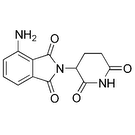
Results from a new study indicate that, in elderly multiple myeloma patients, a combination drug regimen of Velcade (bortezomib), melphalan (Alkeran), prednisone, and thalidomide (Thalomid) (VMPT), followed by a maintenance regimen of Velcade and thalidomide, is superior to the current standard treatment of Velcade, melphalan, and prednisone (VMP) without a maintenance regimen. The authors of the study will be presenting the results of the Phase 3 clinical trial at the upcoming American Society of Hematology (ASH) …
Read the full story »
At the upcoming meeting of the American Society of Hematology (ASH), there will be several presentations about Actimid (pomalidomide). Actimid, a new drug being developed by Celgene Corporation as a treatment for multiple myeloma, is a molecular derivative of thalidomide (Thalomid).
Actimid As A Combination Therapy With Dexamethasone
One of the ASH presentations will show that the combination regimen of Actimid and low-dose dexamethasone (Decadron) is an effective treatment for relapsed multiple myeloma.
Actimid was tested in combination …
Read the full story »
Vitamin C (ascorbic acid) significantly reduces the activity of Velcade (bortezomib) in treatment of multiple myeloma, according to a recent article published in Nature.
Several preclinical studies suggest that vitamin C, which is one of the most common dietary supplements for cancer patients, increases the efficacy of cancer drugs and decreases treatment-related side effects. However, more recent studies show that vitamin C can counteract the activity of certain cancer chemotherapy agents, including Velcade, in the body.
Velcade, the first …
Read the full story »
A combination regimen of Velcade (bortezomib), Doxil (pegylated liposomal doxorubicin), and dexamethasone (Decadron), known as the VDD regimen, is highly effective for initial treatment of multiple myeloma, according to a recent article published in the Journal of Clinical Oncology.
Velcade, which is also approved for treatment as a single agent, suppresses tumor growth by inhibiting the enzymes that break down important proteins in cancerous cells. The second component of the VDD regimen, Doxil, blocks the process of …
Read the full story »
Retreatment with Velcade (bortezomib) alone or in combination is an effective treatment for patients with relapsed multiple myeloma, according to a recent article published in the American Journal of Hematology.
Velcade, which was first approved in 2003, has previously been evaluated as a single-agent treatment in Phase 2 and 3 trials in patients with relapsed and/or refractory myeloma. It is currently the only single agent with a demonstrated survival benefit in patients with relapsed myeloma.
The prospective clinical trial …
Read the full story »
Patients with multiple myeloma and other blood cancers have a high risk of venous thromboembolism, or blood clotting, according to a recent study published in the Journal of Clinical Oncology. The rate of this complication is influenced by multiple factors, including the type of disease, the type of chemotherapy, and the use of catheters.
Venous thromboembolism (VTE) is a condition in which a blood clot forms in a vein, limiting the blood flow in the affected vein. Additionally, a piece …
Read the full story »
Preliminary results from an ongoing Phase 1 clinical trial indicate that carfilzomib (Kyprolis), a new proteasome inhibitor, has significant therapeutic results in patients with relapsed myeloma. The Multiple Myeloma Research Consortium (MMRC) reported the results at the Joint ECCO 15-34th ESMO Multidisciplinary Congress, which was held in Berlin from September 20 to 24.
Carfilzomib selectively induces cell death in cancer cells by blocking the activity of proteasomes, which are enzymes that break down proteins. Carfilzomib is similar to Velcade …
Read the full story »