Weekly Polls About Multiple Myeloma Have Started In The Beacon Forums – The Myeloma Beacon has started conducting “Weekly Polls” in the Beacon forums. These polls and their related discussions address important myeloma-related questions and are intended to provide useful information and insight for multiple myeloma patients and caregivers. Each poll will begin on Wednesday and run for one week; results can be viewed at any time. The first poll question is: How involved are you in your myeloma treatment …
Read the full story »
According to a recent Italian study, the results of PET/CT scans conducted at diagnosis, after induction therapy, and after stem cell transplantation may predict survival in multiple myeloma patients.
Specifically, the study authors found that patients with PET/CT scans negative for cancer cells, bone lesions, or other signs of active cancer had longer progression-free and overall survival times than patients with positive PET/CT scans.
“[Our study shows] a clear identification of the prognostic relevance of PET/CT [along with] other more …
Read the full story »
A recent report published by a group of multiple myeloma experts in Europe recommends individualized treatment strategies for elderly myeloma patients based on their physical health.
Specifically, the authors suggest that physicians evaluate the age and physical condition of elderly myeloma patients prior to therapy in order to create well-tolerated regimens that would optimize treatment outcomes.
According to Dr. Antonio Palumbo, from the University of Torino in Italy and the lead author of the report, tailored therapies are important for …
Read the full story »
Results of a recent small German study show that stem cell transplantation as salvage therapy is most effective in patients who had a long remission duration after a previous transplant.
Specifically, results of the study show that patients who relapsed 12 months or later after their last transplant had significantly longer progression-free and overall survival times after salvage transplantation than patients who relapsed within 12 months.
According to the study authors, patients who relapse within 12 months of a previous …
Read the full story »
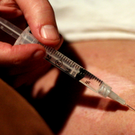
Multiple myeloma patients being treated with Velcade often experience peripheral neuropathy, which is nerve damage that causes pain, numbness, or tingling in the extremities. Recent studies have identified two ways of reducing neuropathy and other side effects associated with Velcade, while maintaining similar efficacy: administering Velcade intravenously once weekly instead of twice weekly or administering Velcade subcutaneously instead of intravenously.
Velcade (bortezomib) is currently approved to be used intravenously for the treatment of multiple myeloma in the United States and …
Read the full story »
Long-term follow-up results of a European study indicate that an autologous stem cell transplant followed by a “mini” donor stem cell transplant may be more effective than one or two autologous stem cell transplants in multiple myeloma patients.
“The results show that [“mini”] donor stem cell transplantation was superior to autologous stem cell transplantation concerning relapse rates and long-term progression-free survival and overall survival,” said Dr. Gösta Gahrton of the Karolinska University Hospital in Sweden and one of the study …
Read the full story »
Results of a recent study conducted in California show that patients with the myeloma precursor disease monoclonal gammopathy of undetermined significance (MGUS) do not receive adequate evaluation, follow-up, or treatment for their condition.
Based on their findings, the study authors recommended that these patients receive better care consistent with the guidelines for the management of MGUS produced by the first international consensus MGUS panel in 2009.
“[Because of inadequate evaluation], we are missing patients at risk for bone-related problems, which …
Read the full story »