

Articles tagged with: Thalidomide
News»

The International Myeloma Working Group (IMWG) recommends that multiple myeloma patients should have their stem cells collected within four cycles of therapy with Revlimid (lenalidomide), thalidomide (Thalomid), or Velcade (bortezomib). Otherwise, these drugs may interfere with stem cell collection. The recommendations were published in the journal Blood in August.
During an autologous stem cell transplant, physicians collect a patient’s stem cells in the early stages of the patient's anti-myeloma drug regimen, and return these same cells to the individual after the regimen is complete. Transplantation is a common treatment usually given to …
News»

Patients with multiple myeloma and other blood cancers have a high risk of venous thromboembolism, or blood clotting, according to a recent study published in the Journal of Clinical Oncology. The rate of this complication is influenced by multiple factors, including the type of disease, the type of chemotherapy, and the use of catheters.
Venous thromboembolism (VTE) is a condition in which a blood clot forms in a vein, limiting the blood flow in the affected vein. Additionally, a piece of the clot can break off, travel through the vein, and block …
News»

Researchers at St George’s, University of London have developed a new directory that could lead to quicker and more targeted treatment for multiple myeloma and other cancer patients.
The directory identifies 40,000 genes that can cause cancer and lists the effects on each gene by three drugs used in the treatment of multiple myeloma.
The three drugs included in the directory are thalidomide (Thalomid), Revlimid (lenalidomide), and Actimid (pomalidomide, CC-4047). Both thalidomide and Revlimid are approved for the treatment of multiple myeloma. Actimid is still being tested for multiple …
News»
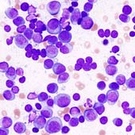
Researchers from the University of Athens and Penn State University have announced that in a study of newly diagnosed patients, elevated TIMP-1, a blood biomarker, correlated with more advanced multiple myeloma, poorer overall survival, and the presence of bone lesions.
TIMP-1 belongs to the family of “tissue inhibitors of metalloproteinases,” a group of proteins that help regulate bone turnover – the removal of old bone tissue (resorption) and the addition of new bone tissue (ossification). Through multiple molecular pathways, excess TIMP-1 may contribute to tumor development because it directly encourages cell growth …
News»

A recent study published in the journal Clinical Infectious Diseases evaluates the infection risk presented by different multiple myeloma therapies. The authors conclude that while current therapies, particularly high-dose regimens and novel agents, improve the outcomes of patients with myeloma, they also introduce a much greater risk of infection.
Myeloma impairs the quality and quantity of immune system proteins that an individual produces. As a result, more than 75 percent of myeloma patients will experience marked immune system depression, becoming vulnerable to potentially life-threatening infections. In fact, infections are the leading cause of death …
NewsFlash »
Research Confirms MGUS Is Linked To Myeloma, But May Not Be Linked To As Many Diseases As Previously Thought – According to a study published in the August 2009 issue of Mayo Clinic Proceedings, monoclonal gammopathy of undetermined significance (MGUS) may not be linked to as many serious diseases as previously thought. MGUS is a symptomless blood disorder that is a precursor of multiple myeloma. This study confirmed a link between MGUS and 14 diseases. However, before this study, it was also thought to be a precursor for many more diseases. These Mayo Clinic findings may save patients from unnecessary tests and treatment. For more information, please see the Mayo Clinic press release.
Lawsuit Claims Celgene Corporation Misappropriated The Idea Behind Thalidomide – On August 24, Beth R. Jacobson filed a lawsuit against Celgene Corporation claiming “misappropriation of an idea” and “unjust enrichment” concerning the company’s sale of thalidomide (Thalomid) and Revlimid (lenalidomide) for the treatment of myeloma. The suit claims that Jacobson developed the original idea for treating myeloma with thalidomide and is consequently entitled to compensation based on established legal precedent. Jacobson seeks a minimum of $300 million in past damages and 25 percent of the future profits from the sale of Celgene’s thalidomide products. For more information, please see Ms. Jacobson's press release.
Light The Night Walks – On September 11, the Leukemia & Lymphoma Society (LLS) will hold Light the Night Walks in St. Louis and St. Peters, MO. Participants will walk along a two- or three-mile route, carrying a lighted balloon, in support of those touched by blood cancer. For more information, please visit the LLS Web sites for each of the events.
For a more detailed listing of myeloma related events, please check the Myeloma Beacon Events Calendar.
News»
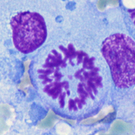
The U.S. Food and Drug Administration has approved a Phase 3 clinical trial evaluating perifosine in relapsed and refractory multiple myeloma patients. Perifosine, also known as KRX-0401, is an oral anti-cancer agent being developed by Aeterna Zentaris and licensed in the U.S., Canada, and Mexico by Keryx Biopharmaceuticals.
The trial, entitled “A Phase 3 Randomized Study to Assess the Efficacy and Safety of Perifosine Added to the Combination of Bortezomib and Dexamethasone in Multiple Myeloma Patients Previously Treated with Bortezomib,” will evaluate the safety and efficacy of perifosine, compared to placebo, when …
