

Articles tagged with: Stem Cell Transplant
News»

Indian researchers recently identified several factors linked to improved survival among multiple myeloma patients who have undergone stem cell transplantation.
These factors included albumin levels at diagnosis and the achievement of a response – particularly a complete response – after transplantation.
Patients who achieved a complete response after transplantation, for example, had a median overall survival of 17 years.
The use of novel agents as initial treatment was also associated with improved overall survival.
Based on their findings, the study investigators recommend using initial therapy prior to transplantation that aims to achieve the highest …
News»

Results from a recent Spanish study suggest that treatment with a combination of intravenous busulfan and melphalan is as effective as melphalan alone in preparing patients with multiple myeloma for stem cell transplantation.
Given that the busulfan (Busulfex)-melphalan (Alkeran) regimen uses a lower dose of melphalan (140 mg/m2) than the melphalan-only regimen (200 mg/m2), these findings may benefit patients who are unable to tolerate high doses of melphalan.
A previous study found that an oral busulfan-melphalan combination might be more effective but not as safe as melphalan alone in preparing …
Opinion»

There’s been a fair amount of discussion lately in the columns and comment boards here at The Myeloma Beacon about stem cell transplants, as well as their effectiveness and their impact on our bodies.
Myeloma patients who have yet to have a transplant often scour the Internet looking for help and information about what they may face. For many, stem cell transplantation is not an “if,” but more a matter of when.
The pre-transplant period brings for most people uncertainty, anticipation, and some trepidation.
Trying to understand the impacts that stem cell …
News»
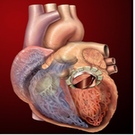
Results from a large, retrospective study conducted at City of Hope National Medical Center indicate that patients who receive stem cell transplants are at a higher risk of developing heart disease than the general population.
The researchers found that patients who underwent a donor transplant and developed graft-versus-host disease, a common transplant-related complication, were at the greatest risk of developing heart disease.
“Our findings show that the process of receiving a stem cell transplant alone increases a recipient’s risk of developing heart disease,” said the study’s lead investigator Dr. Saro Armenian from …
Opinion»

It has been fourteen months since my autologous stem cell transplant. Although I’m in remission (Thank God!), several challenging residual issues remain.
I can remember hearing from other transplant recipients in past years, bemoaning the fact that they still weren’t “back to normal” months or more after their stem cell transplants. I didn’t pay much attention at the time. But now I think I might understand how they felt.
Like those I have heard from in the past, I am still not fully recovered from my transplant.
I noticed it again last …
NewsFlash »
Subcutaneous Velcade Receives Approval In Europe For Multiple Myeloma – Janssen-Cilag, the company that markets Velcade (bortezomib) in Europe, announced on Friday that the European Medicines Agency has granted marketing authorization of subcutaneous Velcade. The decision was based on results of a Phase 3 study demonstrating that subcutaneous Velcade is as effective as intravenous Velcade but associated with fewer and less serious side effects. Europe is the third region where subcutaneous Velcade is now available; both the U.S. Food and Drug Administration and Health Canada approved the use of subcutaneous Velcade for myeloma in their respective countries earlier this year. For more information, see the press release from Janssen-Cilag or the Phase 3 results published in the journal Hematologica (abstract).
Methyljasmonate Shows Activity Against Multiple Myeloma – Results from a recent preclinical study suggest that methyljasmonate, a compound produced by plants under stressful conditions, may be active against multiple myeloma. Previous studies have shown that a related family of plant compounds called jasmonates can kill various types of cancer cells. In the current study, researchers found that methyljasmonate was able to kill myeloma cells lines and myeloma cells from patient samples at concentrations that did not affect normal stem cells. In mice that carried diffuse multiple myeloma lesions, a combination of methyljasmonate and Velcade prolonged overall survival time more than either drug alone. For more information, please see the study in the British Journal of Hematology (abstract).
Phase 1/2 Clinical Trial To Study Rapamune-Hydroxychloroquine Combination In Relapsed And Refractory Myeloma Patients – The Knight Cancer Institute at the Oregon Health and Science University is starting a Phase 1 trial of Rapamune (sirolimus or rapamycin) and hydroxychloroquine (Plaquenil) in combination with cyclophosphamide (Cytoxan) and dexamethasone (Decadron) in relapsed and refractory multiple myeloma patients. Myeloma patients must have received at least one prior therapy to be able to participate in the trial. Rapamune belongs to the same class of drugs as Torisel (temsirolimus) and Afinitor (everolimus) called mTor inhibitors; it is currently approved for the prevention of kidney rejection. Hydroxychloroquine is used to prevent and treat malaria and to treat rheumatoid arthritis. Both agents have been studied in preclinical studies for multiple myeloma. For more information, please see the clinical trial description.
Donor Stem Cell Transplants May Be More Effective But Less Safe Than Autologous Transplants As Second Transplant For Myeloma Patients – Results from a recent retrospective analysis show that allogeneic (donor) stem cell transplants may be more effective but less safe than autologous (self) stem cell transplants in myeloma patients who have already received an autologous transplant. The analysis included data from 1,192 patients who received two autologous transplants and 630 patients who received one autologous transplant followed by a donor transplant. Patients in the auto/donor group received reduced-intensity chemotherapy after the autologous transplant, in preparation for the donor transplant. The results showed that patients in the auto/donor group were 1.4 times more likely than patients in the auto/auto group to achieve a complete response. However, auto/donor patients had a 3.3-fold higher risk of treatment-related death than auto/auto counterparts. Overall survival and progression-free survival were comparable between both groups of patients. For more information, please refer to the study in Bone Marrow Transplantation (abstract).
News»
The results of a Phase 1 study show that Kepivance reduces the severity of melphalan-related mouth ulcers in multiple myeloma patients. Due to better tolerability, the melphalan dosage could be safely increased to 280 mg/m2 prior to a stem cell transplant.
Almost two-thirds of the patients, who all had normal kidney function, had responded to the regimen at 100 days post transplant. The study investigators point out, however, that a Phase 2 trial will be necessary to better determine the efficacy of this regimen.
High-dose chemotherapy followed by autologous stem cell transplantation …